Your vet hands you a bag of prescription food and says: feed this and nothing else for the next two to three months. Your heart sinks — not because you can't do it, but because your dog lives for treats. Training relies on them. The kids sneak them. Bedtime has a biscuit. Twelve weeks of nothing feels impossible, and that feeling is exactly why so many elimination trials quietly fail: owners cave, sneak a treat, and never realise it reset the whole experiment.
Here's the reframe that makes the whole thing doable: you can still reward your dog every single day — you just have to be clever about what the reward is. This guide is the practical, vet-sourced answer to “what can I actually give?”, so you can finish the trial and keep your dog happy.
First, why one little treat matters so much
It feels dramatic that a single biscuit could undo weeks of effort — but immunologically, it's true. An elimination trial is a controlled experiment with exactly one variable: the food. Introduce a second food, even once, and you've added a variable you can't account for. A trace of the wrong protein can keep an allergic reaction simmering, so a diet that would have worked looks like a failure.
Small amounts may be sufficient to induce a hypersensitivity reaction and will interfere with the assessment of the EDT.
And the net cast over “food” is wider than most owners expect. As Tufts' Dr. Lisa Freeman puts it, a successful trial has to control everything that goes in your dog's mouth:
The successful elimination diet trial has to control everything that goes into your pet's mouth, such as treats, rawhides, dental chews and toothpaste, table food, dietary supplements, and flavored medications.
So the rule isn't “fewer treats.” It's “every single thing your dog swallows has to be trial-safe.” Once you accept that, the strategies below make it surprisingly livable.
The golden rule: your dog's diet IS the treat
The safest treat on earth during a trial is the exact food your dog is already eating, because by definition it adds no new variable. This one idea solves 80% of the problem:
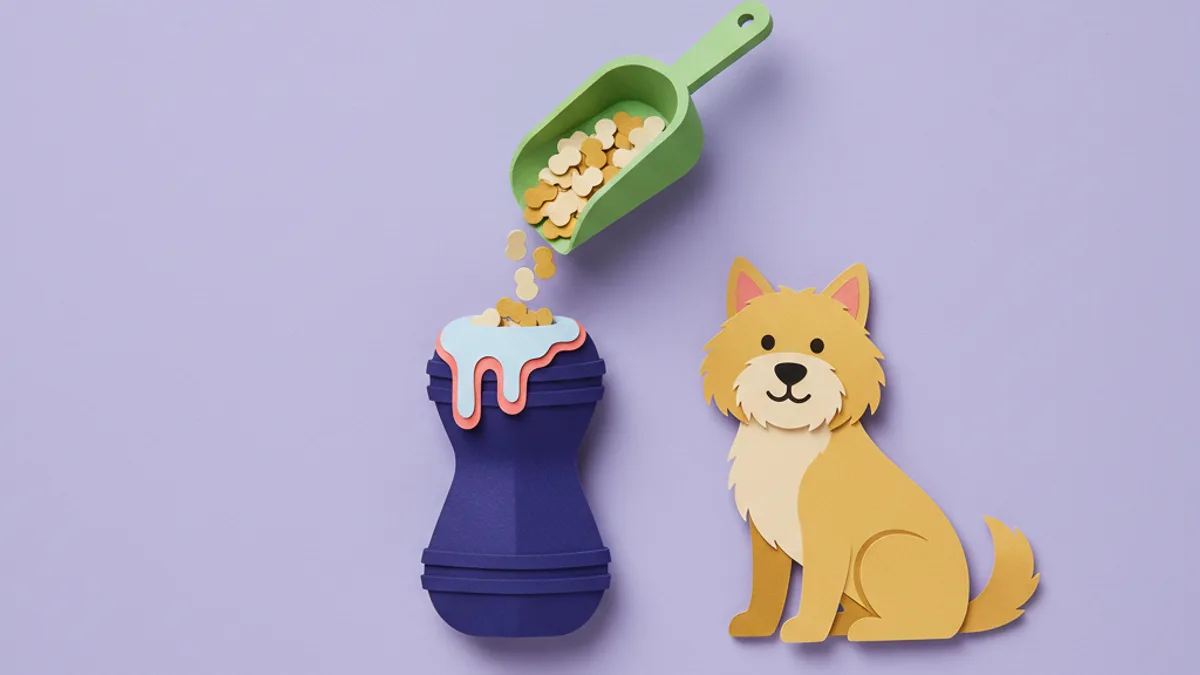
- Training rewards: set aside a handful of the daily kibble and use those pieces as training treats. Your dog doesn't count calories — a piece of kibble from your hand is a 'treat' simply because you delivered it like one.
- Bake it into 'cookies': if you're on a canned prescription diet, you can spread it thin and bake it into firm, treat-like pieces. A warm, baked texture reads as a special reward even though it's the same food.
- Freeze it for enrichment: smear the canned diet inside a rubber toy and freeze it for a long-lasting lick.
Dr. Alexandra Gould, a board-certified dermatologist, recommends exactly this enrichment approach for dogs who need to chew:
For big chewers, you can try filling unflavored rubber toys, like Kongs or Toppls, with frozen prescription canned food, canned pumpkin puree, or sunflower seed butter instead.
(Those non-diet fillers — pumpkin, seed butter — are options your vet may green-light for your trial; always confirm, because the strictest trials stay diet-only.)
The 10% rule still applies — even to safe treats
Even when every treat is trial-safe, there's a second limit worth respecting: treats shouldn't crowd out the balanced diet doing the nutritional work. The widely-used veterinary guideline is the 10% rule.
Treats — including training rewards and chews — should make up no more than 10% of daily calories; the complete, balanced diet should do the other 90%. During a trial, that 10% should still come from trial-safe sources. Source: VCA Animal Hospitals / WSAVA guidance
The practical move: weigh out the day's food in the morning, and pull your training rewards from that same portion. That way treats never push your dog over their calories, and the trial stays clean.
Single-ingredient options (with your vet's blessing)
If you and your vet decide your dog can have something beyond the diet, the rule is one ingredient, nothing hidden. Dr. Gould's go-to for many trials is fresh produce:
For treats during diet trials, your best option is fresh fruits and veggies.
Commonly suggested single-ingredient options — only if your vet approves them for your dog's specific trial — include:
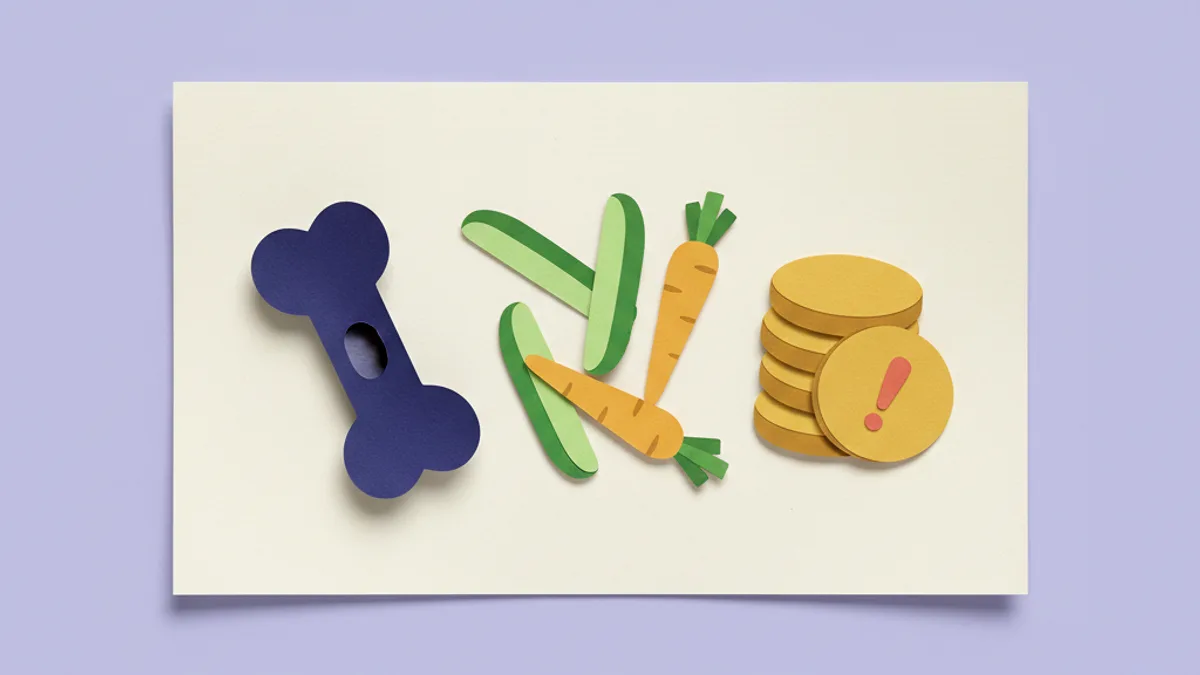
- Crunchy vegetables: carrot, cucumber, celery, green beans, or slices of bell pepper.
- Cooked, plain sweet potato or plain potato (unless your trial is testing potato).
- Small pieces of dog-safe fruit: blueberries, melon, pear or apple (no seeds/core).
- A novel single protein that matches a novel-protein trial — e.g. a little plain cooked rabbit if rabbit is the trial protein.
Two cautions even with 'safe' produce: it still adds a variable to a diagnostic trial (so the strictest approach is diet-only), and treats can upset digestion if you pile them on. When in doubt, default to the diet-as-treat method above.
Store-bought treats: read this before you trust the label
It's tempting to grab a bag labelled 'limited ingredient', 'hypoallergenic' or 'single protein'. The problem is that over-the-counter treats are frequently contaminated with proteins that never appear on the label. As Dr. Gould warns:
Unfortunately, even if a bag of pet store treats says it's meat-free, it could still be contaminated by meat proteins if the factory isn't 100% vegetarian.
If you want a packaged treat, the safer route is to match it to your prescription line: many therapeutic diet brands make hydrolyzed treats designed for trials, and your vet may recommend hydrolyzed pill-pockets or treats from the same maker as the diet. NC State's clinical nutrition service and dermatology clinics routinely point owners to these matched treats precisely because the protein source is controlled.
The hidden 'treats' everyone forgets
This is where good intentions go wrong. These don't feel like treats, but they all count:
- Flavoured medications — beef-flavoured tablets, chewable heartworm/flea preventives, joint chews. Ask your vet for unflavoured or alternative formulations (never stop a prescribed medicine on your own).
- Flavoured toothpaste — most are poultry- or malt-flavoured. Pause or switch during the trial.
- Dental chews, rawhides, bully sticks, pig ears — all are food.
- Supplements — fish oil, glucosamine chews, probiotics; many are flavoured.
- Other pets' food — the cat's bowl, a housemate dog's dinner, the bird's seed.
- Human moments — a dropped crumb, a finger licked clean, the plate 'pre-washed' by the dog.
How to give medication without breaking the trial
Pilling is the classic trap, because the easiest method — a flavoured pill pocket or a wrap of cheese — is exactly what you can't use. Trial-safe alternatives:
- Hide the pill in a small ball of your dog's own canned trial diet.
- Use a hydrolyzed pill-pocket matched to your prescription line, if your vet recommends one.
- Ask your vet whether the medication comes in an unflavoured tablet, capsule or liquid.
- Learn to 'pill' directly with a treat-free technique your vet or nurse can demonstrate.
Keeping training (and the household) on track
You don't have to pause training for three months. Pull rewards from the daily food allowance, keep pieces tiny, and lean on non-food rewards too: praise, a favourite toy, a game of tug, or a quick burst of play all reinforce behaviour. For multi-pet and multi-person homes, a few rules keep everyone honest:
- Brief everyone — partners, kids, dog-walkers, grandparents — before day one. One uninformed treat undoes weeks.
- Feed pets in separate rooms and lift bowls between meals so there's no bowl-raiding.
- Put a visible note on the fridge listing what's allowed, so there's no guessing.
- Keep your dog leashed on walks if they scavenge or counter-surf.
Australia's Animal Dermatology Clinic makes the same point to owners: the diet must be followed strictly, with no other foods, treats, table scraps or flavoured medications during the trial. Treating it as a whole-household project — not one person's job — is what gets it over the line.
After the trial: bringing treats back
Once the trial and reintroduction phase have pinpointed your dog's safe and unsafe ingredients, you can reintroduce treats — choosing ones whose ingredients you've confirmed are safe. Read every label, match treats to known-safe proteins, and you'll have a happy, well-rewarded dog whose flare-ups you finally understand.
ThePawcess logs treats and slips so you always know whether the trial is still on track.
Run a clean trial — freeFrequently asked questions
Can I give my dog any treats during an elimination diet?
Yes — but the safest treat is your dog's own trial diet, repurposed as training pieces, baked 'cookies' or frozen in a toy. Anything else must be a single, vet-approved ingredient in tiny amounts. Avoid all store-bought treats unless they're hydrolyzed treats matched to your prescription diet, because over-the-counter treats are often contaminated with undeclared proteins.
What can I use instead of treats to train my dog during the trial?
Set aside part of the daily food ration and use those pieces as rewards, and lean on non-food rewards too — praise, toys, play and games all reinforce behaviour without adding a food variable.
How do I give my dog flavoured medication during a food trial?
Don't use flavoured pill pockets or cheese. Hide the pill in your dog's own canned trial diet, use a hydrolyzed pill pocket matched to the diet if your vet suggests one, or ask whether an unflavoured formulation exists. Never stop a prescribed medication without veterinary advice.
Are fruits and vegetables safe treats during an elimination diet?
Many single-ingredient vegetables and fruits (carrot, cucumber, green beans, blueberries, melon) can be options if your vet approves them for your dog's specific trial — but they still add a variable, so the strictest trials stay diet-only. Never give grapes, raisins, onions, garlic, chocolate, macadamia nuts or anything with xylitol, which are toxic.
Experts & sources cited
Every quote in this article is real and links to its original source. ThePawcess is not a veterinary practice — this is educational, not a diagnosis.
- Dr. Alexandra Gould, DVM, DACVDBoard-certified veterinary dermatologist, writing for Preventive Vet · USA
- Dr. Lisa M. Freeman, DVM, PhD, DACVIM (Nutrition)Cummings School of Veterinary Medicine at Tufts University (Petfoodology) · USA
- Dr. Heng L. Tham, DVM, DACVDBoard-certified veterinary dermatologist, Today's Veterinary Practice · USA
- VCA Animal HospitalsClinical client education — the 10% treat rule · USA
- NC State Veterinary HospitalClinical nutrition service — hydrolyzed diets · USA
- Animal Dermatology ClinicSpecialist veterinary dermatology referral, Australia · Australia