If your dog has itchy skin, recurring ear infections, or a stomach that never quite settles, your vet may suspect a food allergy — properly called an adverse food reaction. There's no quick blood test that reliably diagnoses it. Instead, the diagnosis is made by an elimination diet trial: feed one carefully chosen diet and nothing else for two to three months, then deliberately reintroduce foods to see what brings the signs back.
As UK dermatologist Dr. Hilary Jackson concludes in a 2024 review, a limited-antigen diet trial followed by a food provocation remains the optimal way to confirm a food allergy in dogs and cats. Here's how to run one properly, step by step.
Step 1: Rule out the other causes first
Itching has many causes, and food is only one of them. Before a diet trial is worth the effort, your vet will usually rule out (and treat) fleas and mites, and clear up any active skin or ear infection. Food allergy and environmental allergy (atopic dermatitis) look almost identical from the outside and often coexist — which is exactly why a controlled trial, not a guess, is the only way to separate them.
This step matters for a practical reason too: a dog with a raging infection will keep scratching even on a perfect diet, making the trial look like a failure. Get the dog comfortable first, and you're far more likely to finish.
Step 2: Choose the right diet (this makes or breaks it)
There are two diets that actually work for a trial, and one popular option that doesn't:
- Novel-protein diet — a single protein and carbohydrate your dog has never eaten, such as kangaroo, venison, rabbit or duck. If your dog has had it before, it can't be novel.
- Hydrolysed diet — a veterinary prescription food in which the protein is broken into pieces too small for the immune system to recognise. Most dermatologists favour an extensively hydrolysed diet for exactly this reason.
- “Limited ingredient” supermarket food — usually a trap. It often contains a protein your dog already eats, and over-the-counter foods are repeatedly found to contain proteins not listed on the label.
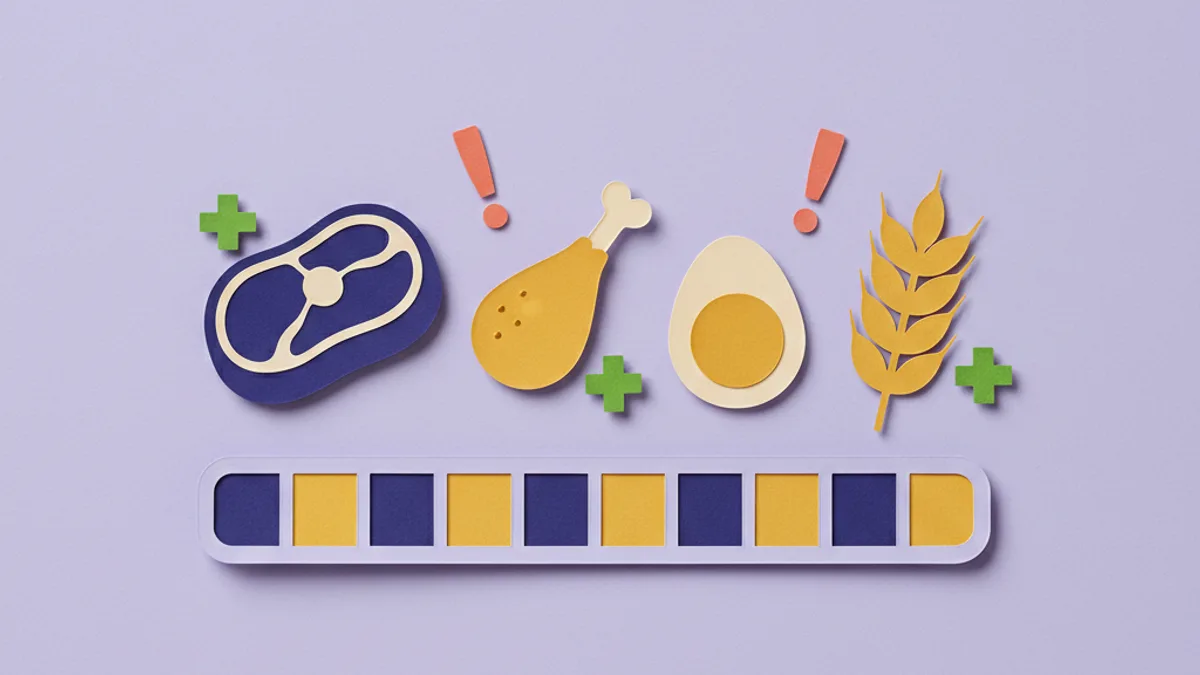
Which proteins are the usual suspects? In the largest review of confirmed cases, beef, dairy, chicken and wheat topped the list — so a genuine novel protein steers well clear of them.
Across 297 dogs with confirmed food allergies, animal proteins dominate — grains are blamed far more often than they're actually at fault. Source: Mueller & Olivry, BMC Veterinary Research (2016)
Pick the diet with your vet, and favour a veterinary prescription product for its quality control. Then commit to it completely.
Step 3: Run the strict phase for 8–12 weeks
This is where the discipline lives. For the whole trial, the chosen diet is the only thing your dog eats. That means no treats, no table scraps, no dental chews, no rawhides, no flavoured supplements — and, the one everyone forgets, no flavoured medications.
The successful elimination diet trial has to control everything that goes into your pet's mouth, such as treats, rawhides, dental chews and toothpaste, table food, dietary supplements, and flavored medications.
Why so long? Because skin is slow to settle. Around half of food-allergic dogs improve by week three, but it takes eight weeks to catch more than 90%. Stopping early is the single most common way owners waste the whole effort. Mark the end date on day one, feed pets separately so no one swaps bowls, and if you need training treats, use pieces of the trial food itself.
Step 4: The re-challenge (the step that proves it)
Here's the part most owners skip — and it's the part that actually makes the diagnosis. If the signs improve on the trial diet, you haven't yet proven food was the cause; environmental allergies could explain the improvement too. You confirm it by reintroducing the original food and watching what happens.
If the animal's pruritus and skin lesions resolve and do not relapse while the elimination diet is fed, an FA can only be confirmed if the clinical signs reappear upon reintroduction of the previous diet.
If the itching returns within hours to a couple of weeks of going back on the old food, and then settles again when you return to the trial diet, you've confirmed a food allergy. From there you can reintroduce ingredients one at a time — see our reintroduction schedule guide — to pin down the specific triggers. VCA Animal Hospitals describes this elimination-then-challenge structure as the core of the whole diagnostic.
Step 5: Build the long-term diet
Once you know which ingredients are safe and which trigger a flare, you and your vet can choose a complete, balanced everyday diet that avoids the culprits for good. Many dogs stay on a suitable commercial diet; some do best on a long-term hydrolysed or carefully formulated home-cooked diet — the latter should always be balanced by a veterinary nutritionist so it isn't missing nutrients.
Australia's Animal Dermatology Clinic and clinics worldwide put the same bottom line to owners: the elimination-and-challenge diet remains the only reliable way to confirm a dietary trigger — blood and saliva “allergy tests” for food simply aren't accurate enough to replace it.
ThePawcess walks you through all five steps, counts the weeks, and assembles the record your vet needs.
Run the trial with a guide — freeFrequently asked questions
Can I diagnose a dog food allergy with a blood or saliva test instead?
No. Blood and saliva 'food allergy' tests are not reliable enough to diagnose adverse food reactions in dogs. The elimination diet trial followed by a re-challenge remains the gold standard recommended by veterinary dermatologists.
What can my dog eat during an elimination diet?
Only the single chosen trial diet (a strict novel-protein or a hydrolysed prescription diet) and water. No treats, table scraps, dental chews, rawhides, flavoured supplements or flavoured medications — any of these can invalidate the trial.
How long before I see results?
About half of food-allergic dogs improve by three weeks, but it takes 8–12 weeks to see results in more than 90%. Judge success at the end of the trial, not in the first few weeks.
Experts & sources cited
Every quote in this article is real and links to its original source. ThePawcess is not a veterinary practice — this is educational, not a diagnosis.
- Dr. Lisa M. Freeman, DVM, PhD, DACVIM (Nutrition)Cummings School of Veterinary Medicine at Tufts University (Petfoodology) · USA
- Dr. Heng L. Tham, DVM, DACVDBoard-certified veterinary dermatologist, Today's Veterinary Practice · USA
- Dr. Hilary A. Jackson, BVM&S, DVD, DACVD, DECVDThe Dermatology Referral Service, Glasgow — Veterinary Dermatology (2024) · UK
- VCA Animal HospitalsClinical client education (reviewed by veterinarians) · USA
- Mueller & OlivryBMC Veterinary Research — common food allergen sources in dogs (2016) · USA
- Animal Dermatology ClinicSpecialist veterinary dermatology referral, Australia · Australia