If your dog is itching, licking their paws raw, or battling endless ear infections, your vet may have recommended an elimination diet trial — feeding one carefully chosen diet, and nothing else, for two to three months. It is, by consensus, the most reliable way to find out whether food is the problem. As UK dermatologist Dr. Hilary Jackson concludes in a 2024 *Veterinary Dermatology* review, a limited-antigen diet trial followed by a deliberate food re-challenge remains the optimal method of confirming a food allergy in dogs and cats.
Here's the catch: the trial is only as good as how strictly it's run, and the most common reason it fails has nothing to do with the diet you picked. It's the small, well-meaning slips that quietly invalidate the whole thing. Below are the seven that vets see most — and how to prevent each.
1. The “just one treat” slip
This is the big one. A single training treat, a dental chew, a crust of toast from a toddler — any of it can keep an allergic reaction simmering and make a working diet look like a failure. The bar is genuinely all-or-nothing.
The successful elimination diet trial has to control everything that goes into your pet's mouth, such as treats, rawhides, dental chews and toothpaste, table food, dietary supplements, and flavored medications.
Prevent it: decide the trial diet is the only thing your dog eats, and brief every human in the house before day one. If you need treats for training, use small pieces of the trial food itself. ThePawcess builds a one-tap “log a slip” habit for exactly this reason — a recorded slip tells you whether to keep going or restart, instead of guessing weeks later.
2. Forgetting that medications and supplements are food too
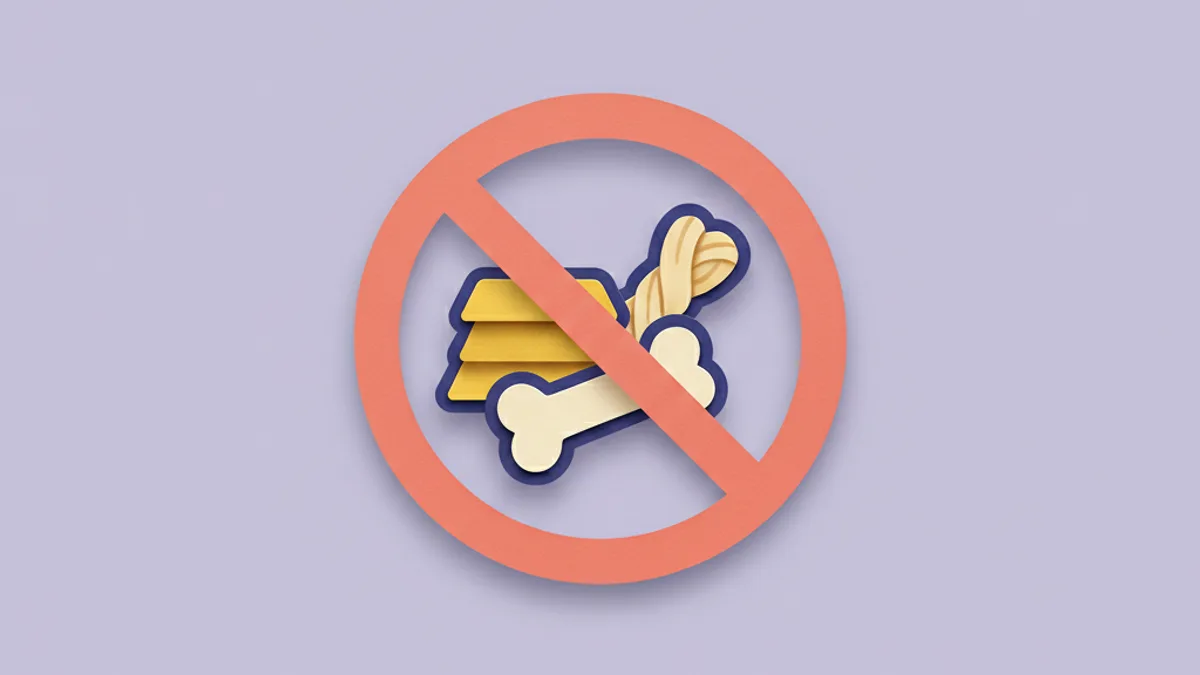
Flavoured heartworm chewables, beef-flavoured pain tablets, fish-oil capsules, joint supplements, even meat-flavoured toothpaste — all of it counts. This is the slip owners almost never see coming, because it doesn't feel like “feeding.”
No other pet food, human food, table scraps, treats, rawhide chews, flavored toothpaste, or daily supplements can be given to the pet.
Prevent it: before the trial starts, list every medication and supplement your dog takes and ask your vet for unflavoured or alternative formulations. Don't stop a prescribed medication on your own — swap it for a trial-safe version with veterinary guidance.
3. Ending the trial too early
Skin takes time to calm down. Owners often see no change at three or four weeks, assume the diet “isn't working,” and bail — right before it would have paid off. The evidence is clear that patience is part of the protocol.
Increasing the duration of the EDT to 8 weeks increases the sensitivity to more than 90%.
Pooled data from 209 dogs with confirmed food allergy: about half respond by week 3, but it takes 8 weeks to catch more than 9 in 10. Source: Olivry & Mueller, BMC Veterinary Research (2015)
Most specialists ask for 8–12 weeks for skin signs (shorter — around 3–4 weeks — for purely digestive cases). Australia's Animal Dermatology Clinic puts the same number to owners plainly: the diet “must be followed strictly for six to twelve weeks, with no other foods, treats, table scraps or flavoured medications given during this time.” Prevent it: mark the end date on a calendar at the start, and judge success only at the finish line — not on a bad-itch day in week three.
4. Choosing a protein your dog has already eaten
An elimination diet works by feeding a protein the immune system has never met (a novel protein like kangaroo, venison or rabbit) or one broken into pieces too small to react to (a hydrolysed prescription diet). Picking a “limited ingredient” supermarket food with chicken or beef your dog has eaten for years defeats the purpose before you begin.
Two traps hide here. First, over-the-counter “novel protein” foods are repeatedly shown to contain proteins not on the label — cross-contamination at the factory. Second, even genuinely new proteins can cross-react with ones your dog already reacts to. Prevent it: choose the diet with your vet, and favour a veterinary prescription hydrolysed or novel-protein diet over a shelf product, precisely because of that quality control.
5. Cross-contamination at home
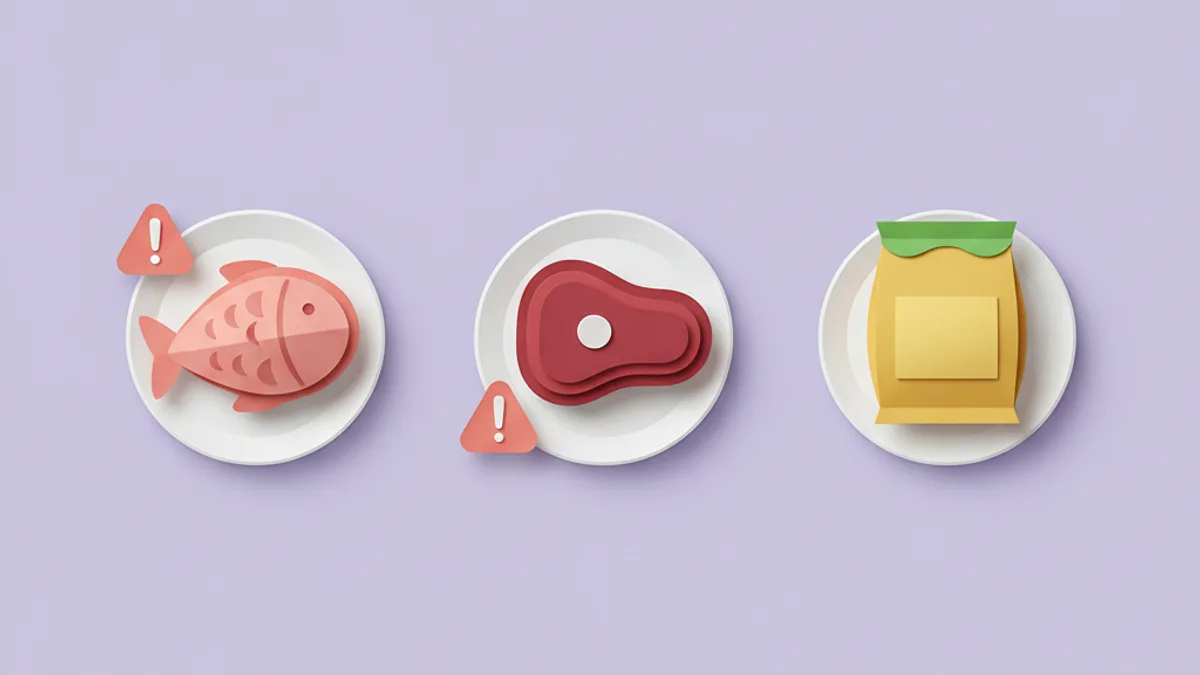
Even with the right diet in the bowl, the household can sabotage it: a shared water-and-food station with another pet, the dog hoovering the cat's bowl, scavenging on walks, licking plates in the dishwasher, or kids sharing snacks under the table. Trace amounts are enough.
Small amounts may be sufficient to induce a hypersensitivity reaction and will interfere with the assessment of the EDT.
Prevent it: feed pets separately, pick up other animals' bowls, keep the dog leashed on walks if they scavenge, and treat the trial like a household project, not a job for one person. New Zealand's Veterinary Dermatology Services and clinics worldwide stress the same point — strict means strict.
6. Not calming the itch and infection first
A dog with a raging skin or ear infection will keep scratching even once the diet is helping — which makes the trial look like it failed, and makes owners give up. Today's Veterinary Nurse lists treating secondary infections and controlling itch before and during the trial as a key to finishing it, because a comfortable dog (and a less-stressed owner) is a trial that gets completed.
Prevent it: ask your vet to address any active infection and short-term itch relief at the start. Tracking flare intensity day by day also separates “the diet isn't working” from “we're still clearing an old infection.”
7. Skipping the re-challenge — and keeping no records
Here's the step almost everyone forgets: a diet that improves signs hasn't proven a food allergy. You confirm it by reintroducing the original food and watching the signs come back, then resolve again on the trial diet.
If the animal's pruritus and skin lesions resolve and do not relapse while the elimination diet is fed, an FA can only be confirmed if the clinical signs reappear upon reintroduction of the previous diet.
Without dated records of what you fed and how your dog responded, the re-challenge is unreadable — and so is the whole trial. As Dr. Freeman warns, get the controls wrong and you can “completely invalidate the elimination diet trial, waste a lot of time and effort, and prolong the time until you find the cause.” Prevent it: log every day, plan the reintroduction schedule one ingredient at a time, and let the record — not memory — tell you the answer.

The thread running through all seven
Every mistake on this list comes down to two things: strictness and records. A food trial isn't a vibe; it's a controlled experiment you run at home over two to three months, and a single uncontrolled variable can cost you the whole result. That's exactly the gap ThePawcess is built to close — it holds the protocol, flags a slip the moment it happens, counts the weeks for you, and assembles the day-by-day record your vet actually needs to read the result.
Run the 8–12 week trial with the slips, timing and records handled for you.
Start a guided trial — freeFrequently asked questions
How long does a dog food elimination trial take?
Most veterinary dermatologists recommend 8–12 weeks for skin signs, and about 3–4 weeks for purely digestive issues. Increasing the trial to at least 8 weeks pushes the diagnostic sensitivity above 90%, so stopping early is the most common wasted-effort mistake.
Can my dog have any treats during a food trial?
No. Treats, dental chews, table scraps, flavoured medications, supplements and even flavoured toothpaste all count and can invalidate the trial. If you need treats for training, use small pieces of the trial diet itself, and ask your vet for unflavoured versions of any medication.
Why do I have to reintroduce the old food at the end?
Because improvement alone doesn't prove a food allergy — environmental factors could explain it. A food allergy is only confirmed when signs return after reintroducing the previous diet and then resolve again on the trial diet. Keeping dated records is what makes that re-challenge readable.
Experts & sources cited
Every quote in this article is real and links to its original source. ThePawcess is not a veterinary practice — this is educational, not a diagnosis.
- Dr. Lisa M. Freeman, DVM, PhD, DACVIM (Nutrition)Cummings School of Veterinary Medicine at Tufts University (Petfoodology) · USA
- Dr. Heng L. Tham, DVM, DACVDBoard-certified veterinary dermatologist, writing in Today's Veterinary Practice · USA
- Dr. Hilary A. Jackson, BVM&S, DVD, DACVD, DECVDThe Dermatology Referral Service, Glasgow — Veterinary Dermatology (2024) · UK
- Animal Dermatology ClinicSpecialist veterinary dermatology referral, Australia · Australia
- Veterinary Dermatology ServicesSpecialist dermatology referral, Auckland, New Zealand · New Zealand
- Today's Veterinary NursePeer-reviewed clinical education (NAVC) · USA