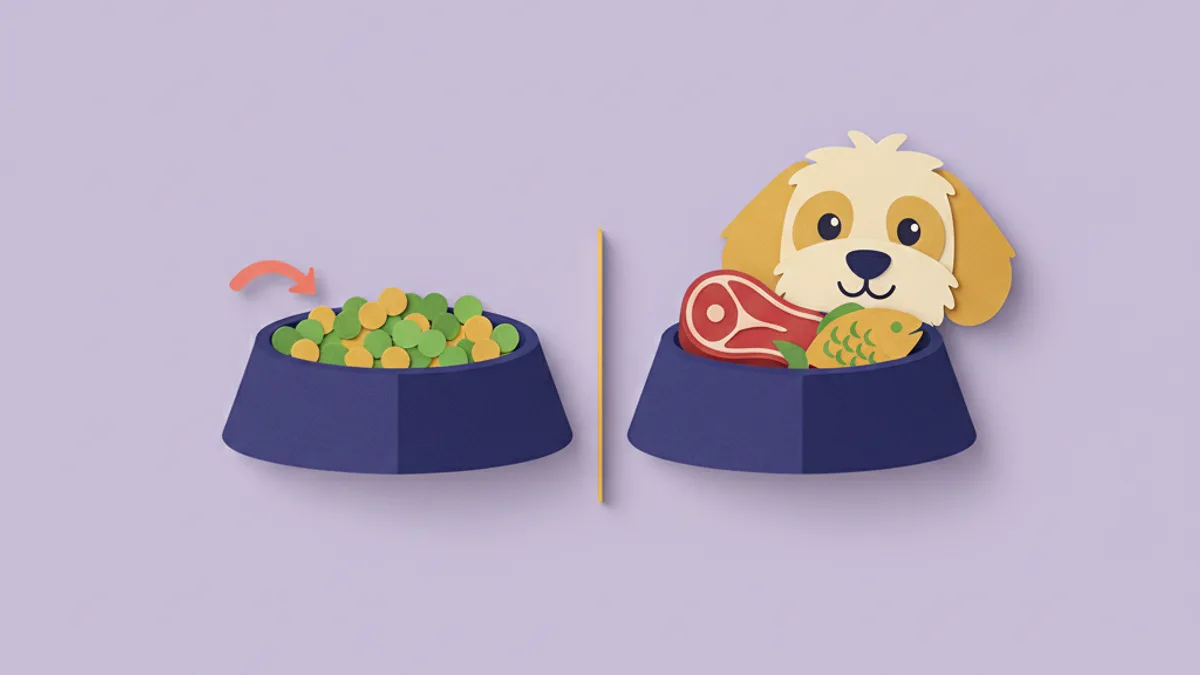
If your vet has talked about a food trial, you've probably heard the phrase 'novel protein' — and maybe been baffled to find kangaroo, venison or even insect protein on the menu. It sounds like a gimmick. It isn't. Novel-protein diets are a genuine, science-based tool for diagnosing food allergies, and understanding how they work helps you use them properly — and avoid a common mistake that quietly closes doors for your dog.
What 'novel' actually means
Food allergy is an immune reaction, and the immune system can only react to a protein it has been exposed to before. A novel protein exploits that simple fact: feed something the body has never encountered, and there are no antibodies waiting to set off a reaction. As vet-reviewed guidance from Vetified puts it:
A truly novel protein is one the dog's immune system has never encountered, meaning no IgE antibodies exist against it, and no allergic reaction can occur.
So 'novel' isn't about being exotic for its own sake — kangaroo isn't magic. It's novel to your dog because your dog has never eaten it. For a dog raised on chicken, chicken is the opposite of novel; for a dog who somehow grew up on kangaroo, kangaroo wouldn't be novel either. It's entirely relative to your individual dog's history.
The usual novel proteins
Because most commercial dog food is built on a handful of proteins, the 'novel' options are the ones dogs rarely eat:
Common novel proteins for dogs include venison, kangaroo, rabbit, duck, bison, alligator, and increasingly, insect-based proteins like black soldier fly larvae.
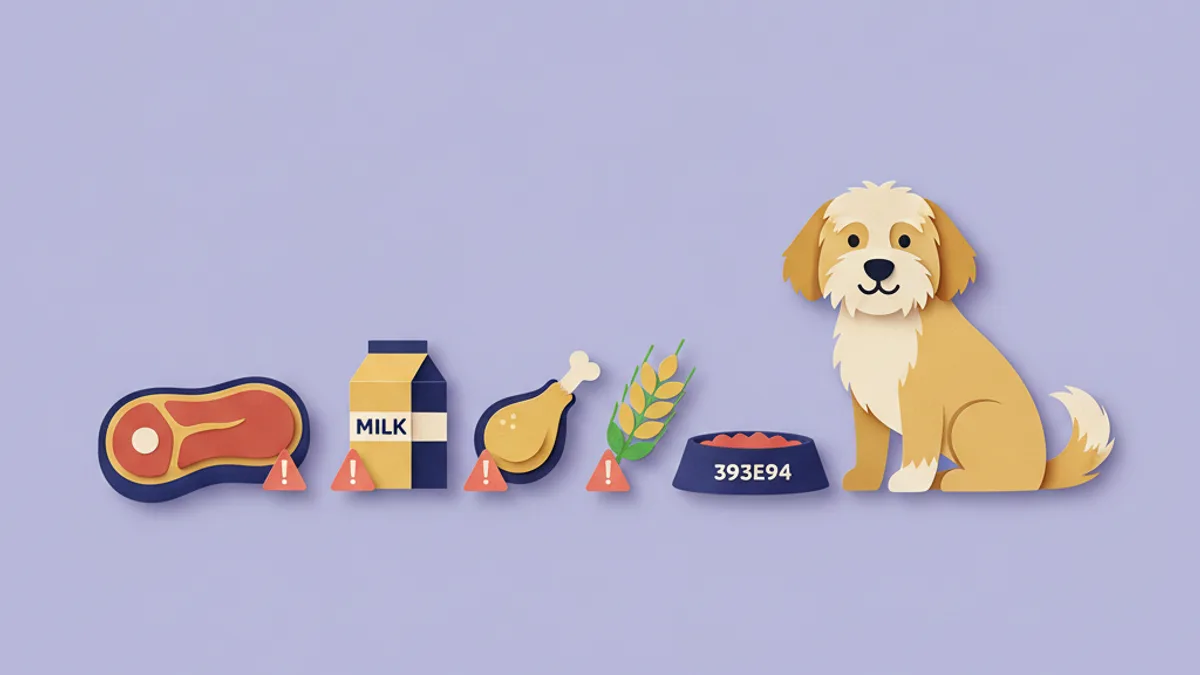
Which of these counts as novel depends on what your dog has already eaten — which is exactly why an accurate diet history is the starting point. The proteins you're trying to avoid are the common allergens your dog has had plenty of:
A novel protein is, by definition, none of these everyday proteins your dog has likely eaten. Pick something genuinely new to your dog — with your vet. Source: Mueller & Olivry, BMC Veterinary Research (2016)

Why novel proteins are getting harder to use
Here's an irony of the pet-food market: the popularity of 'limited ingredient' and 'exotic protein' foods has made genuinely novel proteins harder to find. Venison, duck and even kangaroo now appear in plenty of over-the-counter foods and treats — so a dog may have been exposed to them already without you realising. Two specific problems:
- Hidden prior exposure — a 'novel' protein your dog had in a treat or a previous food isn't novel any more.
- Cross-contamination — over-the-counter novel-protein foods are repeatedly found to contain proteins not on the label, from shared factory lines.
That second issue is why dermatologists favour veterinary prescription diets, which are batch-tested. As UK referral service The Skin Vet explains, veterinary nutrition companies test their diets to verify purity:
They regularly test their diet batches with highly accurate protein detection methods to ensure their status as single protein source diets is fully reliable (polymerase chain reaction tests) – they are proven to be free of other protein contamination.
There's also the issue of cross-reactivity: as Tufts' Dr. Lisa Freeman notes, there can be reactions between proteins from different sources, so even a new protein isn't always a guaranteed clean slate. It's another reason to choose the diet with your vet rather than off the shelf.
The golden rule: don't waste a novel protein
This is the mistake that quietly hurts dogs. Because a protein only works once as a diagnostic novel protein, casually rotating your dog through exotic flavours 'for variety' burns through your future options. Vetified states the consequence plainly:
A novel protein only remains novel until your dog's immune system is exposed to it, so rotating through novel proteins casually can eliminate future diagnostic and treatment options.
Translation: if you feed your healthy young dog kangaroo, venison and duck for fun this year, and they develop allergies in two years, you've used up the very proteins a vet would have reached for. Save the exotics for when they're needed, with veterinary guidance.
Novel protein vs hydrolysed — and when to skip both
Novel protein isn't the only trial option. A hydrolysed diet sidesteps the 'is it really novel?' problem entirely by breaking protein too small for the immune system to see — often the better choice when your dog's diet history is uncertain (a rescue, a scavenger, a dog fed many treats). Both are equally effective; the right pick depends on your dog.
And remember: a novel protein is a diagnostic and management tool, not a casual food swap. Used in a proper elimination trial — fed exclusively for 8–12 weeks, then re-challenged — it can pinpoint your dog's trigger. Used randomly off the shelf, it mostly just spends your options.
Run a proper trial with your chosen diet, and let ThePawcess track the weeks and the re-challenge.
Use your novel protein wisely — freeFrequently asked questions
What is a novel protein for dogs?
A novel protein is any protein your individual dog's immune system has never been exposed to — so there are no antibodies to trigger an allergic reaction. Common examples include venison, kangaroo, rabbit, duck, bison and insect protein, but what counts as 'novel' depends entirely on what your dog has eaten before.
Why are novel protein diets used for food allergies?
Because food allergies only develop to proteins a dog has eaten before, feeding a genuinely new protein gives the immune system nothing to react to. Fed exclusively during an elimination trial, a novel-protein diet helps reveal whether food is causing the signs and, after re-challenge, which ingredient is the trigger.
Should I feed my healthy dog exotic proteins for variety?
Be cautious. A protein only stays 'novel' until your dog is exposed to it, so feeding exotic proteins casually can use up the very options a vet would need if your dog later develops allergies. It's wise to save novel proteins for when they're needed, with veterinary guidance.
Are store-bought novel protein foods reliable for a food trial?
Often not. Over-the-counter novel-protein foods may contain a protein your dog has already eaten, and studies repeatedly find them contaminated with undeclared proteins from shared factory lines. Veterinary prescription diets are batch-tested for purity, which is why they're preferred for a diagnostic trial.
Experts & sources cited
Every quote in this article is real and links to its original source. ThePawcess is not a veterinary practice — this is educational, not a diagnosis.
- The Skin VetUK referral veterinary dermatology — exclusion diet trial choices · UK
- Dr. Lisa M. Freeman, DVM, PhD, DACVIM (Nutrition)Cummings School of Veterinary Medicine at Tufts University (Petfoodology) · USA
- VetifiedVet-reviewed pet health education — novel protein diets · USA
- Mueller & OlivryBMC Veterinary Research — common food allergen sources in dogs (2016) · USA