You did the responsible thing: parted the fur, checked the belly and the base of the tail, looked for the tell-tale 'flea dirt'. Nothing. And yet your dog is scratching, licking and chewing like they're being eaten alive. It's genuinely baffling — and a little maddening. The truth is that fleas are only one cause of itching, and when they're not the answer, there's a well-known short-list of what usually is. Here it is, roughly in order of likelihood.
The short-list of flea-free itch
PetMD's Dr. Jennifer Coates lays out the usual suspects when fleas aren't found:
Other common causes for dog itchiness include environmental allergies, food allergies, other parasites (like mange mites), and bacterial or fungal infections.
Let's take them in turn.
1. Environmental allergies (the most likely)
Atopic dermatitis — an allergic reaction to airborne and household allergens — is the leading cause of non-flea itching in dogs. The triggers are mostly invisible and often indoors, which is why an immaculately flea-free dog can still be miserable:
No flea required: mould, house dust and dust mites are extremely common triggers — and many are present indoors all year, so the itch never fully clears. Source: Intradermal allergy testing study (PMC, 2024)
Tell-tale signs: itchy paws, face-rubbing, ear flare-ups, and a belly or armpits that go pink. It's often seasonal at first (pollen), then year-round as indoor allergens take over. (See seasonal allergies.)
2. Food allergies
If the itch is year-round, comes with recurring ear infections, or a grumbly gut, food allergy moves up the list. Food and environmental allergies look identical on the skin and often coexist, so this is a 'and', not just an 'or'. The only way to confirm a food trigger is an elimination diet trial — and as Tufts' Dr. Lisa Freeman stresses, it only works if you control everything your dog eats. (To tell food from environment, see food vs. environmental allergies.)
3. Mites and other parasites (not fleas)
Fleas aren't the only bug. Mites cause mange, and they're often invisible to the naked eye:
- Sarcoptic mange (scabies) — intensely itchy, contagious to other pets and people; loves ear margins, elbows and the belly.
- Demodectic mange — often more patchy hair loss than frantic itch, but can get itchy if it becomes infected.
- Lice and other parasites — less common, but possible.
These are diagnosed by your vet with a simple skin scrape examined under the microscope — one reason a vet visit beats guessing.
4. Skin infections (yeast and bacteria)
Yeast (Malassezia) and bacterial infections are intensely itchy in their own right — and they're usually secondary to one of the allergies above. The clues are a greasy, red, smelly skin (a musty 'corn-chip' odour points to yeast), often on the paws, in the ears and skin folds. They need veterinary treatment and, crucially, treating the allergy underneath so they don't return. (See yeast infections in dogs.)
5. The less common (but real) causes
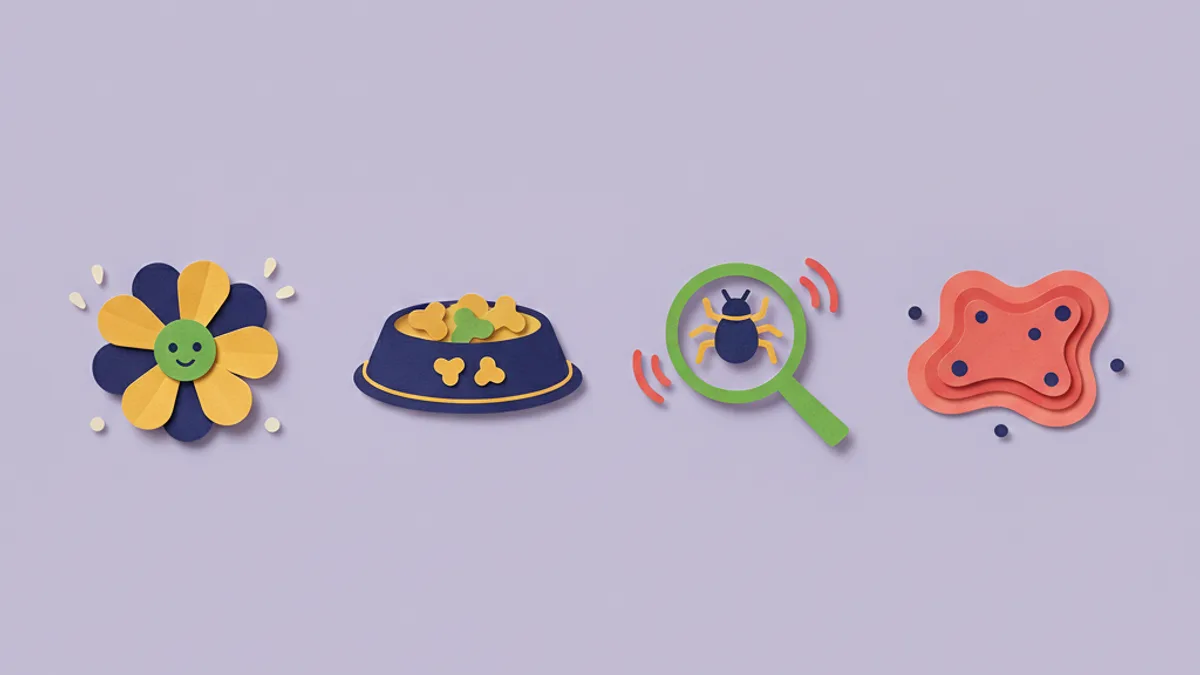
- Contact irritants — new shampoo, cleaning products, bedding or a lawn treatment.
- Dry skin — from low humidity or over-bathing with a harsh product.
- A stuck foreign body — like a grass seed driving sudden, focused licking of one spot.
- Anxiety or boredom licking — possible, but a diagnosis of exclusion after medical causes are ruled out; don't assume it's behavioural first.
What to do about it
- Keep flea control current anyway — it's cheap, and removes the cause you can't always see.
- Look closely — check between the toes and skin folds for redness, grease, a smell, or a stuck grass seed.
- See your vet — a skin scrape and a swab under the microscope quickly sort mites, yeast and bacteria from allergy.
- Investigate allergies — if it's allergic, your vet will work through environmental management and, if food is suspected, a trial.
- Don't just bag-swap foods or pile on home remedies — see soothing safely for what actually helps while you find the cause.
VCA describes itching (pruritus) as a sign, not a diagnosis — the goal is always to find what's driving it. Persistent flea-free itching deserves a proper work-up rather than a guess.
No fleas but still itchy? The free flare-up checker helps organise the clues — then run a guided trial if food's in the frame.
Check the signs freeFrequently asked questions
Why is my dog so itchy if there are no fleas?
The most common cause of flea-free itching is environmental allergy (atopic dermatitis) to things like pollen, mould and dust mites, followed by food allergies, mange mites, and yeast or bacterial skin infections. Also remember that fleas can still be responsible even when you can't see them.
Can my dog have allergies without fleas?
Absolutely. Environmental allergies (to pollen, dust mites, mould) and food allergies cause intense itching with no fleas involved at all. They're the leading causes of flea-free itching and often need a veterinary work-up — and a diet trial for suspected food allergy.
How do I know if it's mites instead of fleas?
You usually can't tell by looking — mange mites are often invisible to the naked eye. Your vet can diagnose them with a simple skin scrape examined under the microscope, which is why a vet visit is the reliable next step for unexplained, persistent itching.
Should I still use flea treatment if I can't find fleas?
Often yes. Fleas are easy to miss, dogs groom away the evidence, and a single flea can set off an allergic dog. Vets frequently recommend strict, consistent flea control regardless, both to treat a hidden infestation and to remove flea allergy as a variable.
Experts & sources cited
Every quote in this article is real and links to its original source. ThePawcess is not a veterinary practice — this is educational, not a diagnosis.
- Dr. Jennifer Coates, DVMPetMD — itchy dog causes & relief (reviewed by Dr. Brittany Kleszynski, DVM) · USA
- VCA Animal HospitalsClinical client education — pruritus (itching) in dogs · USA
- Intradermal allergy testing studyEnvironmental allergens in canine allergic dermatitis (PMC, 2024) · USA
- Dr. Lisa M. Freeman, DVM, PhD, DACVIM (Nutrition)Cummings School of Veterinary Medicine at Tufts University (Petfoodology) · USA