Most owners think of a bath as cleaning. For an allergic dog, it's closer to treatment. A well-run bath physically washes pollen and allergens off the coat, calms inflamed skin, helps clear surface infections, and supports the skin barrier — all without a single tablet. The catch is that 'well-run' has specifics: get the frequency, temperature and contact time wrong and you can actually make an itchy dog worse. Here's how to do it the way dermatologists recommend.
Why the bath is medicine
For environmentally-allergic dogs especially, much of the trigger lands on the dog — pollen, mould spores and dust settling on the coat and paws, then getting licked in. A bath removes that allergen load directly. MedVet dermatologist Dr. Lauren Pinchbeck sums up the multiple jobs a bath does:
Bathing may reduce allergen exposure, treat infections, reduce itch, or support the epidermal barrier.
Those are exactly the things an allergic dog needs — which is why bathing is a core part of allergy management, not an optional extra.
How often to bathe
More often than you'd think for a healthy dog. During an active flare, many veterinary dermatologists recommend bathing 2–3 times per week with the right gentle or medicated product — frequent enough to keep allergens and surface microbes in check. As things settle, your vet will guide you down to a maintenance schedule. The key is using an appropriate shampoo: frequent bathing with a harsh or scented product can dry and irritate the skin, undoing the benefit, so follow your vet's product recommendation.
The single most important step: contact time
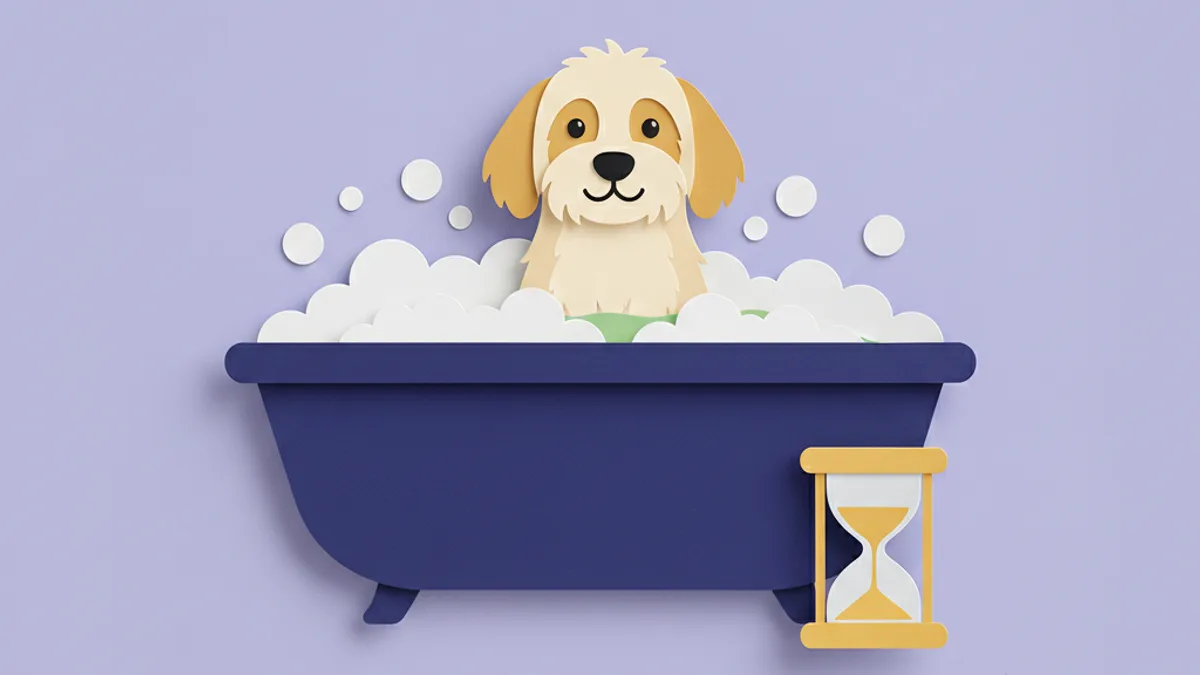
If you remember one thing, make it this. Medicated and soothing shampoos don't work on contact — they need to sit on the skin to do their job. Lathering and rinsing straight away wastes the product. Dr. Pinchbeck's guidance:
Aim for 10 minutes of lather time. But remember, a five-minute bath is better than skipping a bath.
Work the lather down to the skin, not just the fur, then set a timer and keep your dog occupied (a lick mat with a little of their trial-safe food works well). Ten minutes feels long — it's the difference between a bath that treats and a bath that just gets them wet.

Water temperature and rinsing
Two more details that matter for itchy skin:
- Use warm to cool water — never hot. As Dr. Pinchbeck advises, “always use warm to slightly cool water to wet the entire coat.” Hot water dries the skin and can worsen inflammation and itch.
- Rinse thoroughly. Leftover shampoo residue irritates the skin and can itch in its own right — rinse for several minutes until the water runs completely clear.
- Start with the worst areas. Paws, armpits, groin and skin folds are usually most affected, so get the shampoo onto them first to maximise contact time.
- Dry gently. Pat or use a cool dryer setting; never a hot hairdryer on already-inflamed skin.
Paw care between baths
Paws take a beating in allergic dogs — they're in constant contact with allergens and they're the easiest spot to lick. A little routine care between baths helps a lot:
- Wipe after every walk — a clean damp cloth (or a quick rinse) over paws, legs and belly removes pollen before it's licked in.
- Dry between the toes — moisture trapped in the webbing invites yeast; dry thoroughly after wiping, rinsing or wet walks.
- Check between the pads and toes — for grass seeds, burrs, cuts or stuck debris that drive sudden licking.
- Ask your vet about paw soaks — for localised infections, a dilute antimicrobial or chlorhexidine soak may be recommended for paws and folds.
- Keep nails and paw fur tidy — matted paw fur traps moisture and allergens.
Why focus here? Because paws and the coat are where the environmental triggers actually land. On testing, the most common environmental allergens behind itchy skin are airborne and household — exactly what bathing and wiping remove:
Environmental allergens settle on the coat and paws and get licked in. Regular bathing and post-walk paw wipes physically remove this allergen load — a drug-free part of allergy control. Source: Intradermal allergy testing study (PMC, 2024)
Bathing mistakes that backfire
- Human shampoo — wrong pH for dog skin; it dries and irritates. Use a dog-specific product.
- Rinsing off medicated shampoo too soon — no contact time, no benefit.
- Hot water or a hot dryer — worsens inflammation.
- Over-bathing with a harsh product — strips the skin barrier; match frequency and product to your vet's advice.
- Leaving residue — incomplete rinsing itches and irritates.
And remember the limit of bathing: VCA notes that while medicated baths help, persistent or worsening skin problems still need veterinary diagnosis and treatment of the underlying cause. Bathing manages an allergic dog beautifully — but if an allergy is driving it, you still need to find the trigger.
Bathing soothes; finding the cause solves. Run a guided trial if food may be behind your dog's allergy.
Find what's driving the itch — freeFrequently asked questions
How often should I bathe my dog with allergies?
During flares, many veterinary dermatologists recommend bathing 2–3 times per week with an appropriate gentle or medicated shampoo, then reducing to a maintenance schedule as the skin settles. Frequency should match the product and your vet's advice, since over-bathing with a harsh shampoo can dry and irritate the skin.
How long should medicated shampoo stay on my dog?
Aim for about 10 minutes of contact time, worked down to the skin rather than just the fur — that's what allows the shampoo to work. A shorter bath is better than none, but rinsing off immediately wastes the product's benefit.
What water temperature is best for bathing an itchy dog?
Warm to slightly cool water. Avoid hot water, which dries the skin and can worsen inflammation and itching. Rinse thoroughly until the water runs clear, and dry gently without a hot hairdryer.
How do I care for my allergic dog's paws between baths?
Wipe paws (and legs and belly) with a damp cloth after walks to remove allergens, dry thoroughly between the toes to prevent yeast, and check between the pads for grass seeds, cuts or debris. For localised infections, ask your vet about dilute antimicrobial paw soaks.
Experts & sources cited
Every quote in this article is real and links to its original source. ThePawcess is not a veterinary practice — this is educational, not a diagnosis.